
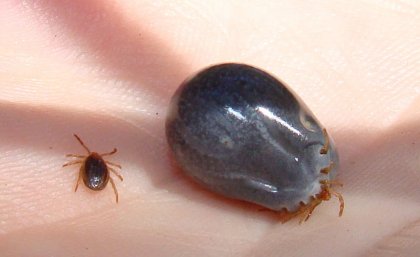
Around 10,000 pets each year in Australia are treated for paralysis ticks, which are common all year round but are most active in spring and summer during humid and moist weather.
University of Queensland School of Veterinary Science staff say prevention is the key to protecting pets from these potentially lethal parasites.
Head of the Emergency and Critical Service at UQ VETS Small Animal Hospital Dr Mark Haworth said there are effective, chewable medications for dogs, and spray treatments for cats.
“Pet owners should be aware that no preventative treatment is foolproof so during ticket season they should also regularly check their animals for ticks,” he said.
“Run your fingers over your cat or dog's entire body – particularly from the shoulders forward, then across the head, ears, necks and lips.
“Sometimes ticks are difficult to find and the first time the owner suspects there might be a problem is when their pet presents with a wobbly gait.
“As the paralysis tick secretes its neurotoxins into an animal, it affects their nerves which causes progressive paralysis and inhibits their ability to breathe, walk, swallow, blink and urinate.
“Regurgitation and vomiting are also symptoms which may lead to aspiration pneumonia.
“If your pet displays any of these symptoms, don’t delay seeking anti-serum treatment because there is a five per cent mortality rate even with treatment.
“If an animal is unable to breathe it may end up in emergency care with mechanical ventilation for an extended period, which could be very expensive.”
Dr Haworth said veterinarians always want to provide the highest standard of care for animals, but appreciated that owners may have budgetary constraints.
“We recommend that owners consider pet insurance to avoid having to make difficult decisions based on economics.”
Paralysis ticks are found in many habitats, particularly in areas of high rainfall, and their natural hosts include koalas, bandicoots, possums and kangaroos.
The UQ VETS Small Animal Hospital general practice at Gatton is open 8am-6pm Monday to Friday until 23 December, and re-opens 3 January. The contact telephone number is 07 5460 1788.
Media: Dr Mark Haworth, m.haworth@uq.edu.au or 07 5460 1788.


